
The True Cost of an Asset: Why Purchase Price Is Just the Beginning
- UniFiX Marketing
- Jun 11
- 6 min read

Most business owners track what they spend on equipment. Far fewer track what that equipment actually costs them over time. This guide breaks down the full picture of asset lifecycle management, from purchase to replacement, and shows you how to make more informed decisions at every stage.

You bought the equipment. You paid the invoice. Job done, right?
Not quite.
The purchase price of an asset is rarely the number that should keep you up at night. It is everything that comes after it. The businesses that stay lean and profitable know what their assets truly cost, and they use that knowledge to make smarter decisions.
What Is Asset Lifecycle Management?
Asset lifecycle management means tracking a fixed asset from the day you acquire it to the day you retire or replace it. The goal is to understand the true cost at every stage and use that asset data to make more informed decisions about when to repair, replace, or schedule maintenance.
For a franchise owner running three locations, that might mean knowing which HVAC unit is generating the most service calls. For a single-unit operator, it might mean finally having a clear picture of whether that aging piece of equipment is worth repairing or quietly bleeding you dry.
Done well, asset lifecycle management turns reactive, expensive surprises into planned, budgeted decisions. It is one of the most underused competitive advantages available to business owners at every scale.
What Is the Total Cost of Ownership for Assets?
Total cost of ownership, or TCO, is the complete picture of what an asset costs over its useful life. For most assets, the purchase price represents as little as 20 percent of that total. The rest accumulates quietly in places most businesses never track. Understanding how to calculate asset lifecycle cost is what separates operators who react to expenses from those who plan for them.

The Hidden Cost Stack Most Businesses Never See
Placement and Installation vs. Lifetime Asset Maintenance Costs
Delivery, installation, setup, and staff training all add to upfront costs, but those are dwarfed by what you spend keeping the asset running over time. A thorough equipment lifecycle cost analysis will almost always reveal that a cheaper asset with higher maintenance needs costs more in the long run. Having a clear maintenance strategy and maintenance schedule makes these costs predictable. Without one, they are shocking.
Service Requests and Asset Health Monitoring
Every time a staff member logs a fault, calls a technician, or loses productive time waiting for a repair, that is a cost. It is also one of the most reliable early warning signals that an asset is declining.
Asset health monitoring starts with service ticket tracking. When you track and manage requests over time, patterns emerge. An asset generating two or three tickets a month is telling you something. High ticket volume is often the leading indicator that a repair versus replace conversation needs to happen before the asset fails at the worst possible moment. Real time data on service frequency is one of the most cost effective signals you have.
For multi-location franchise operators, comparing ticket rates across sites can reveal whether a problem is equipment-specific or operational.
Warranty Gaps and Replacement Costs
The trap most business owners fall into is not knowing when warranty coverage ends. An asset operating outside its warranty window means all replacement costs come straight out of your pocket, often without a budget set aside for it.
Usage and Utilization
High usage accelerates wear and brings forward maintenance cycles. Low usage is a cost too. An underused fixed asset that still requires maintenance is a drag on your operation. Fixed asset management means knowing not just what you own, but whether what you own is earning its keep.
Future Business Plans
The age and condition of your assets directly affects business value, especially when opening new locations or selling a franchise unit. There is little point investing heavily in maintaining an asset you plan to retire in 12 months.

When Should You Replace an Asset?
Knowing when to replace vs. repair equipment is one of the most common challenges business owners face. There is no universal answer, but there is a framework.
Consider replacing when:
Asset maintenance costs in the past 12 months exceed 30 to 40 percent of replacement cost
Service tickets are increasing in frequency month over month
The asset is operating outside its warranty window
Downtime from the asset is measurably impacting revenue or customer experience
Your business plans make the asset less central to operations
Consider repairing when:
The asset is still within warranty or covered by a service agreement
The repair cost is isolated and not part of a recurring pattern
The asset still fits your business plans for the next two to three years
Replacement would cause significant disruption to your operation
The key is making this decision with data, not gut feel, and not in the middle of an emergency.

Why This Hits Differently for Franchise Operators
For franchise operators, managing assets across multiple locations without a clear system means costs compound silently. Asset management software for franchises and franchise equipment tracking software give you a unified view across locations, turning a financial leak into a manageable system. The key features to look for are real time data, mobile devices access, and the ability to schedule maintenance automatically.
For single-unit operators, a cloud based equipment maintenance tracking system used consistently gives even a solo operator the visibility to make more informed decisions.
Building Your Asset Health Scorecard
You do not need perfect data to start. Begin with the assets that cost you the most and build a simple picture for each one using these criteria:
Placement cost — What did it cost to acquire and install?
Lifetime asset maintenance costs — What have you spent keeping it running?
Service ticket history — How often has it needed attention, and is that increasing?
Warranty status — Is it covered, and for how long?
Current usage — Does your team use it as intended?
Business alignment — Does this asset still fit your long term business plans?
Stack those answers together and you have a clear, defensible basis for every repair or replace decision you make.
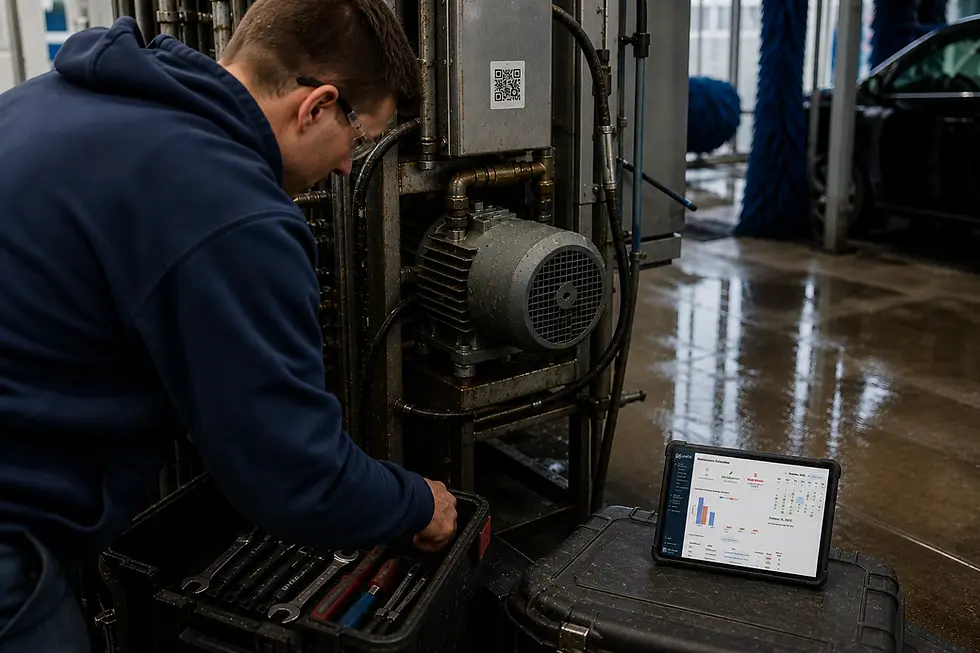
How UniFiX Helps You Stay Ahead
UniFiX was built to solve exactly this problem.
UniFiX is an operations, asset, and repair and maintenance management platform built from within a large multi-location franchise group. It was not built in a boardroom. It was built because we were living this problem across hundreds of locations and the right tools did not exist.
The platform is a complete facility asset management and field service asset management solution for franchise operators and single-unit business owners. It gives your maintenance teams the tools to track and manage assets, spare parts, work orders, and vendor coordination all in one place, accessible from mobile devices in real time.
No more guessing whether a piece of equipment is worth repairing. No more surprise replacement costs. No more reactive decisions made in the middle of an emergency. Just clear, consistent data that gives you the visibility to understand the true cost of every asset in your operation.
Whether you are managing one location or one hundred, UniFiX helps you move from reactive to proactive, reduce equipment downtime, and protect your bottom line.
Maintenance cost reduction becomes a measurable outcome, not just a goal.
Great systems make great operators. Asset lifecycle management is where that starts.
Frequently Asked Questions
What is the total cost of ownership for assets? Total cost of ownership is the complete cost of an asset over its useful life, including purchase price, installation, ongoing asset maintenance costs, repair and replacement costs, and the impact of downtime. Most businesses only track the purchase price, which represents as little as 20 percent of the true cost.
How do you calculate asset lifecycle cost? Start with acquisition and installation costs, then add cumulative maintenance spend, service ticket history, and any replacement part costs. Compare that total against the current replacement cost to determine where the asset sits in its lifecycle and whether continuing to maintain it makes financial sense.
When should you replace an asset? When maintenance costs over the past 12 months exceed 30 to 40 percent of replacement cost, when service tickets are increasing in frequency, or when the asset is operating outside its warranty window with no cost effective coverage. The goal is to make this decision with data, not in the middle of an emergency.
The Takeaway
The businesses that manage assets well do not just track what they own. They track what it costs, what it produces, and where it sits in its useful life.
For franchise operators and business owners, this kind of visibility is a competitive advantage. While others are surprised by repair bills and emergency replacements, you are planning ahead, budgeting accurately, and keeping operations running smoothly.
Asset lifecycle management does not have to be complicated. It just has to be consistent.


Comments